Most guides about healthcare in Japan focus on what to do once you're already sick. This one is about the opposite getting ahead of problems before they start. Japan has one of the most thorough preventive health screening cultures in the world, built around a system most foreigners have never heard of until they move here or start researching it: the ningen dock, literally translating to "human dry dock," a nod to the shipyard practice of pulling a vessel out of the water for a full inspection before problems become serious.
If you're researching a health checkup in Japan whether as a resident maintaining your annual routine, an expat setting up long-term healthcare habits, or a traveler curious about a full body checkup in Japan during an extended stay this guide covers what these checkups actually include, how much they cost, how long they take, and how to choose a package that fits your situation.
What Is a Health Checkup in Japan? Two Different Tiers
Japan generally offers two levels of health screening, and understanding the difference matters before you book anything.
Ippan Kenshin (General Checkup)
This is the standard annual health check offered to residents, often through an employer or municipal program. It typically covers the basics height, weight, blood pressure, urine and blood tests, vision and hearing checks and is either low-cost or free for those enrolled in Japan's national health insurance system.
Ningen Dock (Comprehensive Checkup)
This is the more extensive, optional version most people mean when they talk about a full body health checkup in Japan. A ningen dock goes well beyond the basics, typically adding abdominal ultrasound, a more detailed blood panel, an ECG, lung function testing, and often endoscopy or barium testing for stomach screening. Higher-tier packages can include CT or MRI imaging and cardiac stress testing.
The system dates back to the 1950s, when Japan began prioritizing early detection of chronic illness and cancer as part of a broader public health shift and it's grown into something genuinely unusual by global standards: roughly 3.7 million people in Japan voluntarily pay for a ningen dock every year, across an estimated 1,700 facilities nationwide.
What's Included in a Full Body Checkup in Japan?
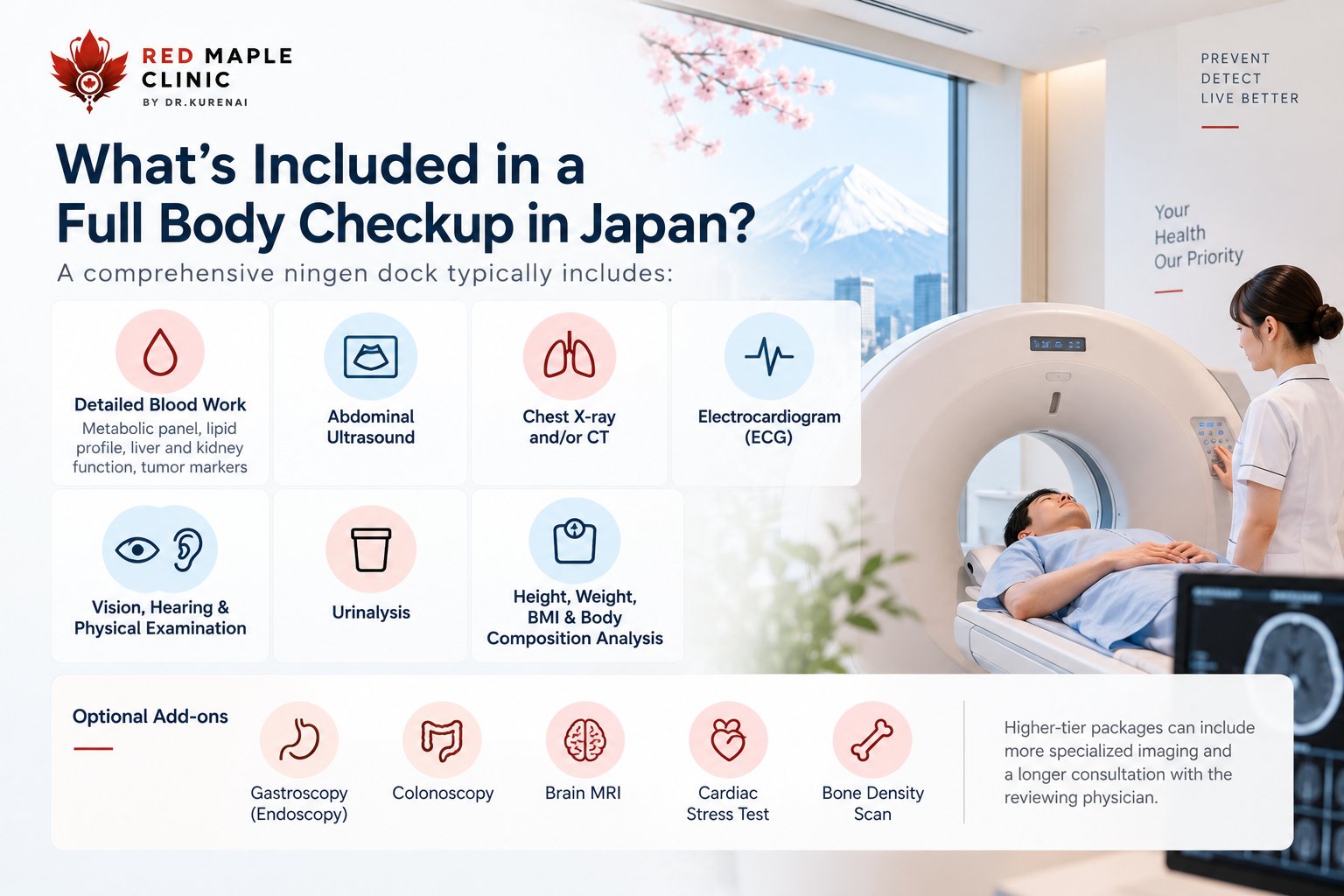
Packages vary by facility and price tier, but a fairly comprehensive ningen dock commonly includes:
- Detailed blood work (metabolic panel, lipid profile, liver and kidney function, tumor markers)
- Abdominal ultrasound
- Chest X-ray and/or CT
- Electrocardiogram (ECG)
- Vision, hearing, and basic physical examination
- Urinalysis
- Height, weight, BMI, and body composition analysis
- Optional add-ons: gastroscopy or colonoscopy, brain MRI, cardiac stress test, bone density scan
Higher-end "executive" style packages can extend the visit across a full day or even two, layering in more specialized imaging and a longer consultation with the reviewing physician.
Full Body Checkup Price in Japan
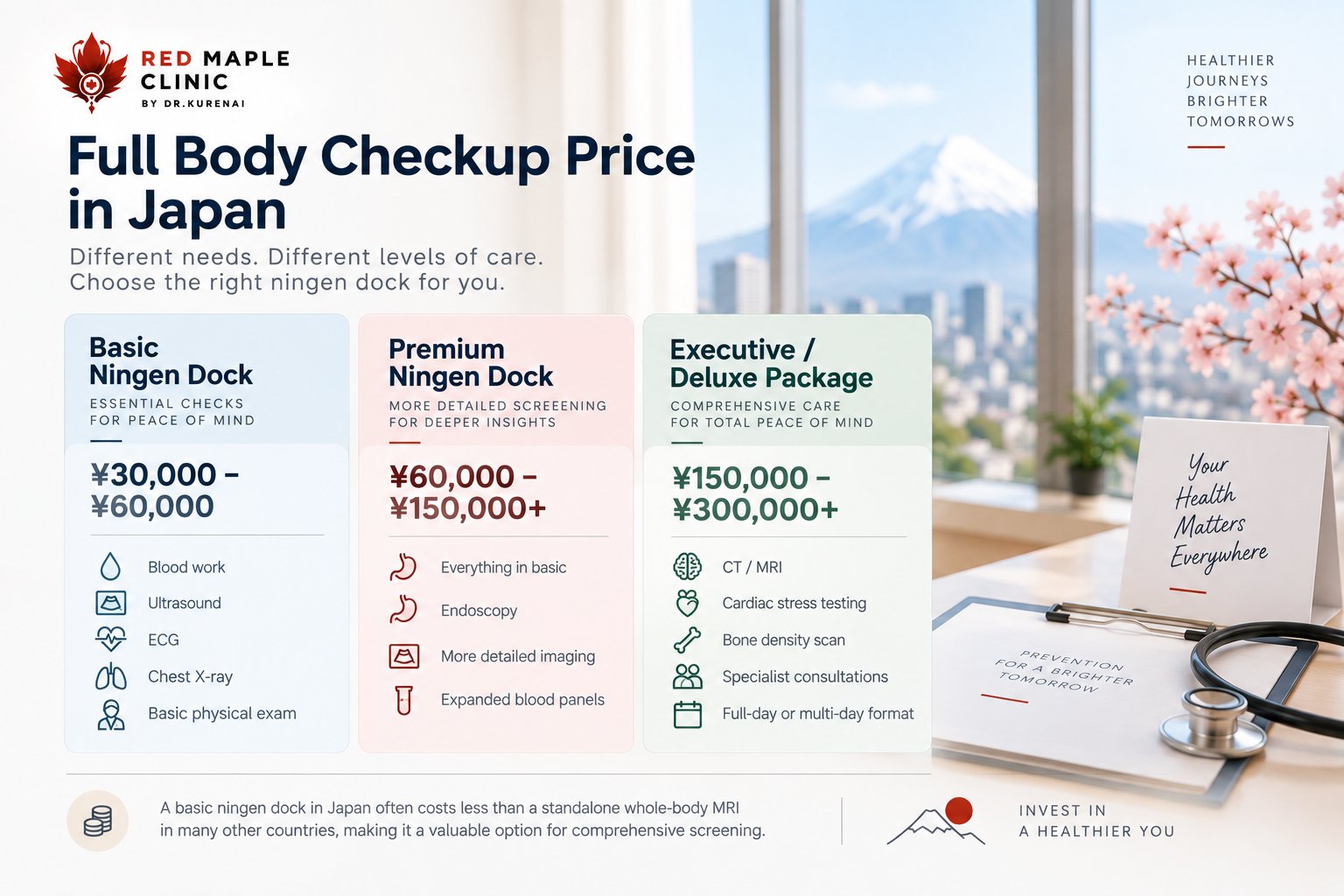
Pricing depends heavily on the tier and the facility, but here's a general sense of what to expect:
Package Tier | Typical Price Range | What's Usually Included |
Basic Ningen Dock | ¥30,000–¥60,000 | Blood work, ultrasound, ECG, chest X-ray, basic physical exam |
Premium Ningen Dock | ¥60,000–¥150,000+ | Everything in basic, plus endoscopy, more detailed imaging, expanded panels |
Executive / Deluxe Package | ¥150,000–¥300,000+ | Full-day or multi-day format, CT/MRI, cardiac stress testing, specialist consultations |
For comparison, a standalone whole-body MRI scan alone in some other countries can cost several times more than an entire basic ningen dock package in Japan one of the reasons the system has started attracting international attention beyond Japan's own residents.
How Long Does It Take, and What Should You Expect?
Most standard ningen dock packages run three to five hours as a half-day appointment, moving from station to station for each test rather than waiting for separate scheduled visits. More comprehensive executive packages can extend to a full day or two.
A few practical notes:
- Fasting is usually required, typically from the night before no food or water after midnight is a common instruction, though your provider will confirm the exact rules.
- Results are typically issued in Japanese. If you're not fluent, confirm in advance whether the facility provides an English-language report or interpretation this varies significantly between providers.
- Turnaround for full results is often around a month, even though the appointment itself is completed in a single day.
Is a Health Checkup in Japan Covered by Insurance?
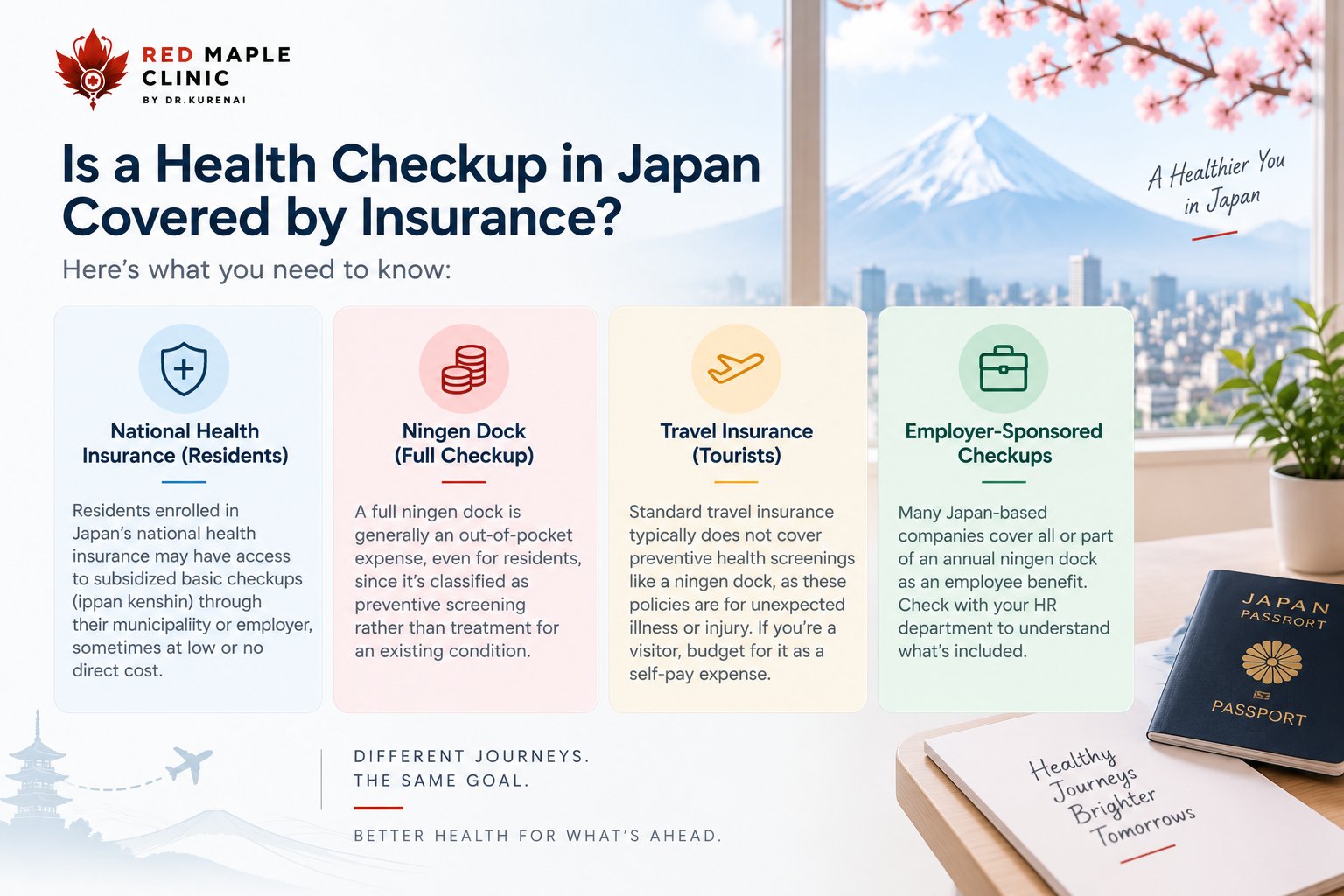
This is worth clarifying directly, since it trips people up:
- Residents enrolled in Japan's national health insurance may have access to subsidized basic checkups (ippan kenshin) through their municipality or employer, sometimes at low or no direct cost.
- A full ningen dock is generally an out-of-pocket expense, even for residents, since it's classified as preventive screening rather than treatment for an existing condition.
- Standard travel insurance typically does not cover preventive health screenings for tourists, since these policies are built around unexpected illness or injury rather than elective, planned checkups. If you're a visitor considering a ningen dock during your trip, budgeting for it as a self-pay expense is the safer assumption.
- Employer-sponsored checkups are common in Japan, and many companies cover all or part of an annual ningen dock as an employee benefit worth checking with HR if you're working for a Japan-based employer.
Where to Get an English-Speaking Health Checkup in Japan
A number of hospitals and clinics in Japan particularly in Tokyo have built specific ningen dock programs around international patients, offering English-language coordination or reporting. Facilities commonly recognized for this include:
- St. Luke's International Hospital (Tokyo) — a long-established option for international residents, offering full English-language ningen dock reporting
- Tokyo Midtown Medical Center — a premium facility known for multilingual staff and a more hotel-like checkup experience
- Tokyo Medical and Surgical Clinic — a long-running English-speaking practice serving the international community
- Kameda Medical Center (Chiba) — a major hospital with a dedicated English-language ningen dock program
- Japanese Red Cross Medical Center (Tokyo) — offers health checkup services with English support
Booking ahead is generally advised, particularly during busier seasons, since comprehensive packages require coordinated scheduling across multiple departments in a single day.
How to Choose the Right Checkup Package for You
A few questions worth answering before you book:
- What's your age and family health history? Basic packages are often sufficient for younger, low-risk individuals, while those in their 40s and up or with a family history of cancer or heart disease often benefit more from a premium or executive-tier package.
- Do you need English-language support? Confirm whether reports, consultations, and the intake process itself will genuinely be handled in English, not just partially translated.
- What's your budget? Basic packages start in a relatively accessible range, while executive tiers with CT/MRI and specialist consultations climb significantly higher.
- How much time do you have? A basic half-day package fits into a busy schedule far more easily than a full-day or multi-day executive program.
If you're weighing a full ningen dock but want a general consultation or a preliminary check first, a smaller English-speaking clinic offering general internal medicine can be a useful starting point before committing to a larger, more expensive package. Red Maple Clinic, based in Tokyo's Bashamichi area and Yokohama, offers general internal medicine consultations with multilingual support, which can help you talk through symptoms, family history, or general concerns before deciding whether a comprehensive screening makes sense for you. More on the practice is available on the about us and doctors pages, with ongoing support outlined under medical assistance.
Frequently Asked Questions
Ques. What is a health checkup in Japan?
Ans. Japan offers two main tiers: a basic annual checkup (ippan kenshin), often subsidized for residents, and a more comprehensive ningen dock, a voluntary, self-pay screening that covers a much wider range of tests in a single half-day or full-day visit.
Ques. What does a medical health check-up in Japan for foreigners typically include?
Ans. Depending on the tier, a checkup can include blood work, abdominal ultrasound, chest imaging, an ECG, urinalysis, and a physical exam, with premium packages adding endoscopy, CT or MRI, and cardiac stress testing. English-language support varies by facility, so it's worth confirming in advance.
Ques. How much does a full body checkup cost in Japan?
Ans. Basic ningen dock packages typically run ¥30,000–¥60,000, premium packages ¥60,000–¥150,000, and executive or deluxe multi-day packages can exceed ¥150,000–¥300,000 depending on the imaging and specialist consultations included.
Ques. Is a full body checkup in Japan worth it for tourists?
Ans. It can be, particularly for travelers on an extended stay who want a thorough screening at a lower cost than equivalent packages in some other countries. Since standard travel insurance generally doesn't cover preventive screenings, it's best budgeted as a planned, out-of-pocket expense.
Ques. Do I need to fast before a health check in Japan?
Ans. Yes, in most cases. Fasting from the night before typically no food or water after midnight is standard for blood work and abdominal ultrasound accuracy, though your provider will confirm exact instructions for your specific package.
Investing in What You Don't Yet Know
A ningen dock isn't about treating an illness it's about finding out what you don't yet know about your own health, early enough to actually do something about it. For residents, expats, and even travelers on a longer stay, Japan's comprehensive health checkup culture offers a level of thoroughness that's hard to find elsewhere at a comparable price.
If you'd like a general consultation to talk through your health history or concerns before booking a full screening, Red Maple Clinic offers English-speaking, multilingual care in the Tokyo–Yokohama area, both online and in person. Reach out to schedule a consultation whenever it's convenient for you.
Sources & Further Reading
- Ningen Dock: Japan's $230 Full-Body Health Checkup — Tokyo Longevity
- Can Travelers Get Comprehensive Health Exams in Japan? — Ikigai Care Japan
- Health Checkup: Insurance & Costs at a National Health Center — E-Housing
- Ningen Dock Japan Health Checkup Guide for Foreigners — Japan Living Life
- Ningen Dock Japan for Foreigners (2026 Guide) — Japan Wellness Travel