When you're unwell in an unfamiliar country, the instinct is usually to find the closest hospital and hope for the best. But the more useful question — especially in Japan, where healthcare quality is excellent but structured quite differently from what many foreigners are used to — is which medical clinic for foreigners actually fits your situation. A quiet clinic with a fluent English-speaking doctor might serve you better for a cold than a large teaching hospital would, while a serious injury calls for exactly the opposite.
This guide walks through how foreigners actually access care in Japan, whether your home insurance will help you at all, roughly what to expect to pay, and how to evaluate specific clinics and hospitals — including a few well-known, foreigner-friendly names — so you're choosing deliberately rather than just picking whatever's nearby.
Can Foreigners Get Medical Treatment in Japan?
Yes, without restriction. Nationality or visa status doesn't prevent you from being treated at a private clinic or hospital in Japan. What changes based on your status is mainly how you pay — residents are generally expected to carry Japanese national health insurance, while tourists and short-term visitors typically pay directly and settle costs out of pocket or through their own travel insurance.
Will My US Health Insurance Cover Me in Japan?
This is one of the most important — and most misunderstood — questions for American travelers, so it deserves a direct answer: generally, no.
According to the U.S. Department of State, Medicare and Medicaid do not work overseas, and most hospitals and doctors abroad do not accept U.S. health insurance at all — most care providers abroad, including in Japan, only accept cash or card payment directly. Medicare's own guidance confirms this: outside of a few narrow exceptions, Medicare generally won't pay for healthcare received outside the United States, and Puerto Rico, Guam, and similar U.S. territories are the only "outside the 50 states" locations still treated as domestic for coverage purposes.
A few additional details worth knowing before you travel:
- Private U.S. insurance plans that claim "emergency out-of-network" coverage often still can't be billed directly, since Japanese providers generally don't have contracts with U.S. insurers — you pay upfront and file for reimbursement afterward, if your plan allows it at all.
- U.S. prescriptions are not honored in Japan. The U.S. Embassy advises bringing a sufficient supply for your entire stay, since some commonly prescribed medications — including certain depression and ADHD medications — aren't widely available or may even be restricted.
- Unpaid medical bills aren't just a billing problem. The State Department notes that failing to pay a medical bill in Japan can result in being prevented from leaving the country by Immigration until it's resolved.
- Medical evacuation is a separate, and expensive, concern — emergency evacuation by air ambulance back to the U.S. can range from roughly $20,000 to $200,000 depending on your location and condition, which is generally not covered by standard health insurance.
The practical takeaway: bring a separate travel medical insurance policy rather than assuming your domestic plan will help, and choose a clinic that's transparent about self-pay pricing so you're not caught off guard.
What Happens If a Tourist Gets Sick in Japan?
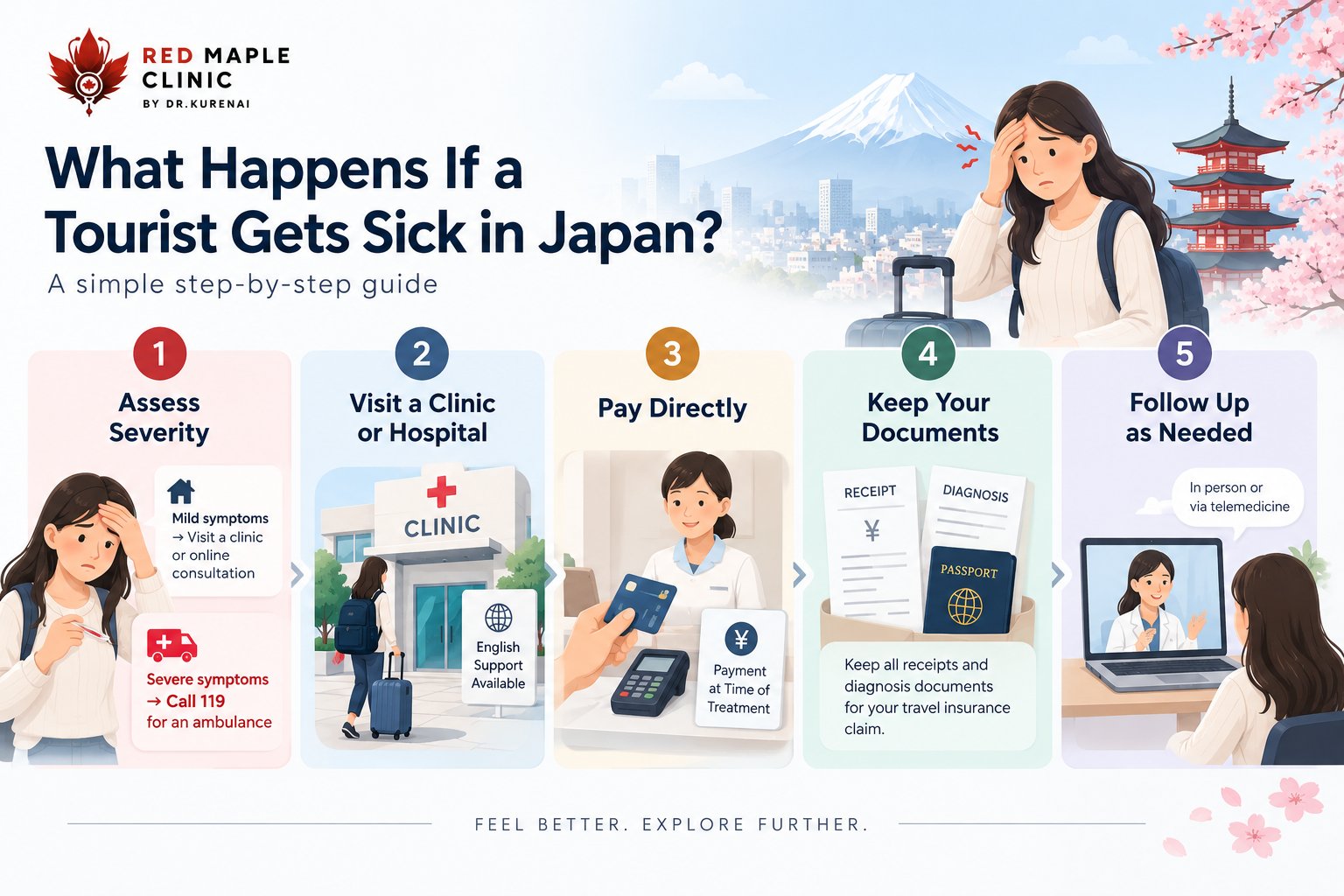
Here's the general sequence, assuming a non-emergency illness:
- Assess severity. Mild symptoms can usually go to a private clinic or online consultation. Anything severe warrants calling 119 for an ambulance.
- Visit a clinic or hospital, ideally one that clearly supports English-speaking patients.
- Pay directly at the time of treatment. Most clinics serving international patients operate on a self-pay basis with upfront pricing.
- Keep every receipt and diagnosis document. These are what your travel insurer will require if you're filing a reimbursement claim afterward.
- Follow up as needed, either in person before you leave or via a telemedicine check-in if your provider offers one.
Is Healthcare Expensive in Japan for Foreigners?
It depends heavily on where you go and what you need. Self-pay clinics built for international patients tend to keep pricing predictable, while large hospitals especially without a referral can carry additional fees. Here's a rough sense of typical costs:
Service | Typical Cost (Self-Pay, JPY) |
Consultation Fee | ¥33,000 |
Consultation + Prescription | ¥55,000 |
First-visit hospital fee (no referral) | Often an additional ¥8,000+ on top of treatment costs |
For comparison, this is often considerably lower than an equivalent emergency room visit in the United States without insurance. Because Japan's healthcare system typically requires direct, upfront payment from non-residents, it's always advisable to confirm consultation fees and any additional treatment costs before your appointment.
Clinic or Hospital? How to Decide
Situation | Better Choice |
Cold, flu, minor injury, travel vaccination | Private clinic |
Ongoing prescription refill, routine follow-up | Private clinic or telemedicine |
Chest pain, major injury, loss of consciousness | Hospital emergency department (call 119) |
Specialist care, surgery, complex diagnosis | Hospital, usually with a referral |
Unclear symptoms needing tests or imaging | Hospital or larger clinic with diagnostic equipment |
Hospitals in Japan often expect a referral letter for smoother, lower-cost treatment, while private clinics are generally built for walk-in convenience — which is part of why many foreigners start with a clinic and only escalate to a hospital when a referral or specialist becomes necessary.
What Makes a Hospital or Clinic "Foreigner-Friendly"?
Japan has a couple of formal accreditation systems worth knowing about:
- JMIP (Japan Medical Service Accreditation for International Patients) — a certification, developed with the Ministry of Health, Labour and Welfare, awarded to facilities that meet specific standards for supporting international patients.
- JIH (Japan International Hospitals) — a separate certification with a similar goal of recognizing facilities equipped to treat foreign patients.
A facility holding either certification is a reasonably strong signal that it has invested in multilingual staff, translated documentation, and processes designed with non-Japanese-speaking patients in mind — useful shorthand if you're comparing options quickly.
A Few Well-Known English-Speaking Hospitals in Tokyo
For travelers who need hospital-based care, we work with trusted partner hospitals and medical facilities that provide high-quality healthcare services for international patients. These partner institutions are equipped to support overseas visitors with professional medical care, multilingual assistance, and comprehensive health services.
- Shonan Kamakura General Hospital — A leading multispecialty hospital known for its advanced medical care, emergency services, and experience in treating international patients.
- TOKUSHUKAI INTERNATIONAL Medical Checkup (TIMC Tokyo) — A dedicated international medical center in Tokyo offering comprehensive health checkups, preventive screenings, and personalized medical services for overseas visitors.
These partner hospitals and clinics are available to support travelers staying anywhere in Japan, providing reliable medical care ranging from routine health assessments to specialized treatment when needed.
What to Look for in a Reliable Medical Clinic for Foreigners
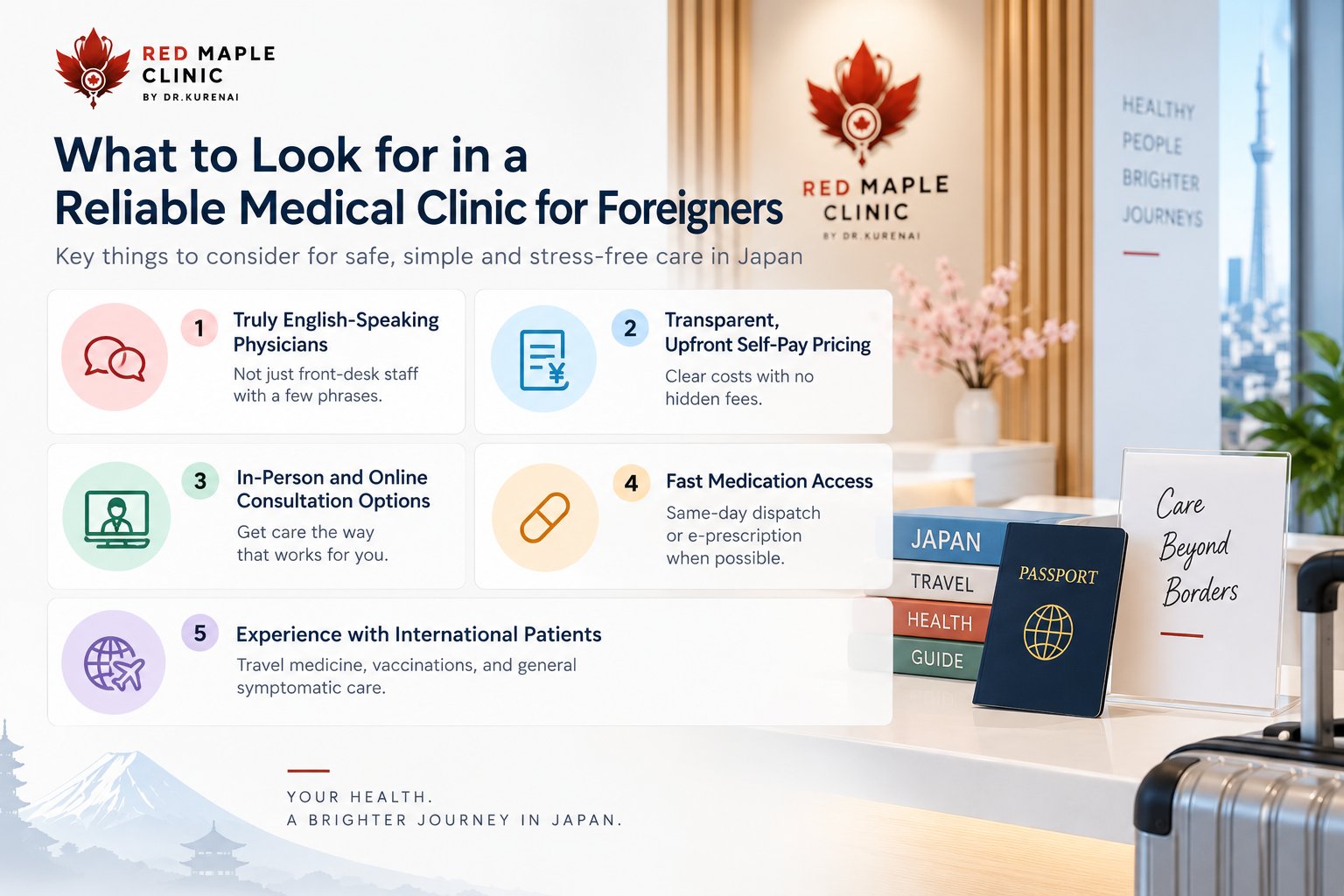
For every day, non-emergency care, a smaller clinic often serves international patients better than navigating a large hospital's referral system. When evaluating one, look for:
- Genuinely fluent English-speaking physicians, not just front-desk staff with a few phrases
- Transparent, upfront self-pay pricing
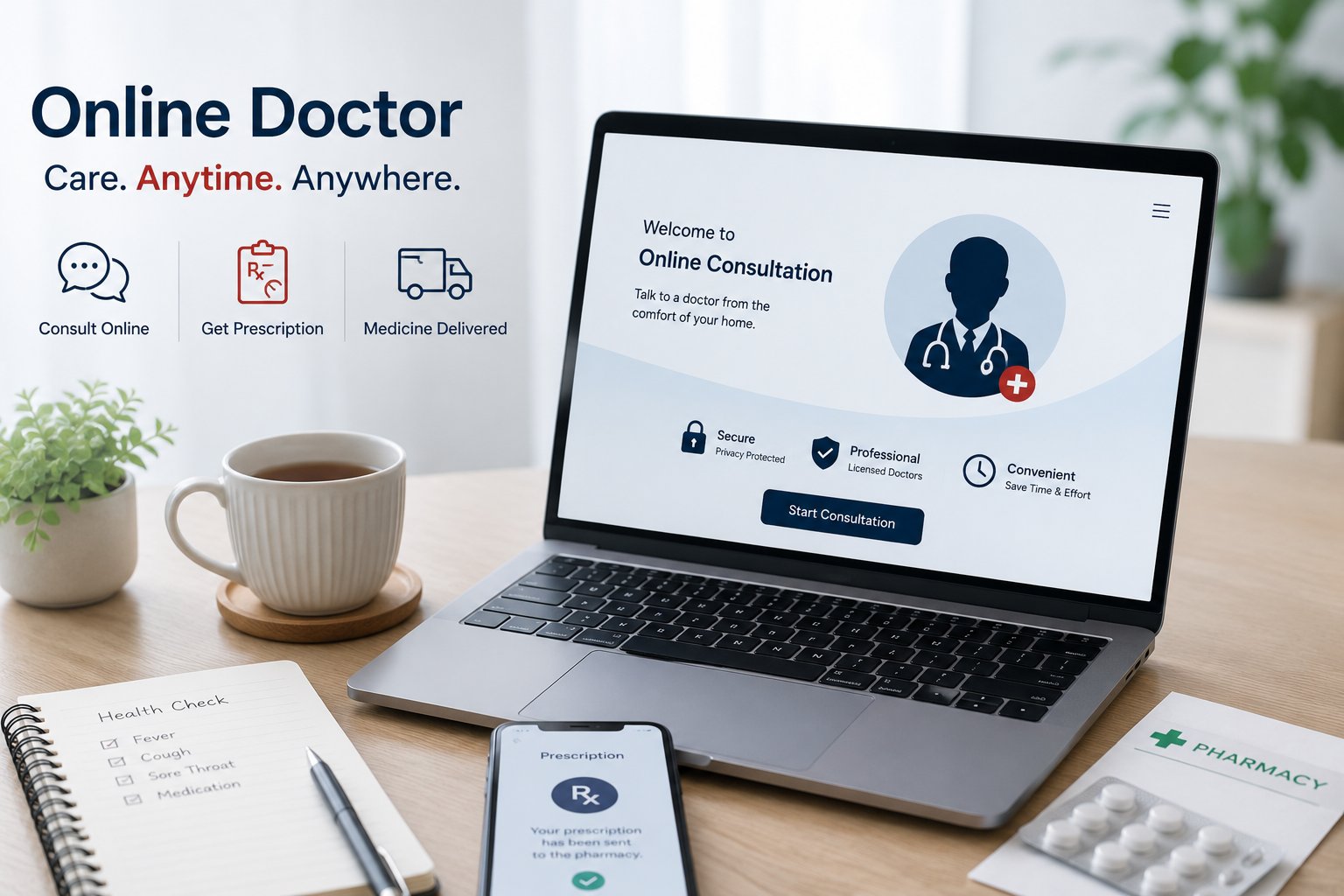
- Both in-person and online consultation options
- Fast medication access, ideally same-day dispatch or e-prescription
Relevant experience for international patients — travel medicine, vaccinations, and general symptomatic care in particular
Red Maple Clinic: A Smaller-Scale Alternative
Red Maple Clinic illustrates what this looks like at the clinic level, as opposed to a large hospital system. Founded by Dr. Kurenai Takebayashi — an ophthalmology specialist with a medical PhD and public health background — the clinic operates in Tokyo's Bashamichi area and Yokohama, with multilingual support built specifically around international patients. You can review her full background on the doctors page.
Notable features relevant to this guide:
- Same-day medication dispatch or e-prescription to a nearby pharmacy
- AI-assisted rapid influenza testing, moving from test to prescription in about 15 minutes
- Travel medicine and imported vaccines, particularly at the Yokohama location
- Both online and in-person consultations, with online pricing set at ¥33,000 for a consultation alone or ¥55,000 including prescription
- Walk-in fees at the physical clinic vary by diagnosis and are confirmed directly at the time of visit
Full details are on the services page, with ongoing support outlined under medical assistance.
Frequently Asked Questions
Ques. Can foreigners get medical treatment in Japan?
Ans. Yes. There's no restriction based on nationality or visa status. The main practical difference is payment — residents typically use Japanese national insurance, while tourists and short-term visitors generally pay directly and seek reimbursement through travel insurance afterward.
Ques. How much does it cost for a foreigner to see a doctor in Japan?
Ans. At a self-pay clinic built for international patients, a general consultation typically runs ¥5,000–¥10,000, with additional costs for testing or medication. Hospitals can carry extra first-visit or no-referral fees, making a private clinic generally more predictable for routine care.
Ques. Can you see a doctor in Japan as a tourist?
Ans. Yes. Tourists can visit private clinics, hospitals, and online doctor services without restriction. For non-emergency symptoms, an English-speaking clinic or telemedicine provider is usually the fastest and least complicated option.
Ques. Will my US health insurance cover me in Japan?
Ans. Generally, no. Medicare and Medicaid do not provide coverage outside the United States, and most Japanese providers don't accept U.S. insurance directly. A separate travel medical insurance policy is the more reliable safety net, and it's worth confirming self-pay pricing with your clinic in advance.
Ques. What happens if a tourist gets sick in Japan?
Ans. Tourists can visit a clinic, hospital, or online doctor depending on severity, generally paying directly at the time of treatment. Keeping receipts and diagnosis paperwork is important for anyone planning to file a travel insurance claim afterward.
Ques. Is healthcare expensive in Japan for foreigners?
Ans. It varies by provider and treatment type. Self-pay clinics tend to offer clear, predictable pricing, while large hospitals — particularly without a referral — can add extra fees. Overall, routine care in Japan is often comparable to or less expensive than equivalent uninsured care in the U.S.
Ques. What's the best hospital in Tokyo for foreigners?
Ans. For serious or specialized care, hospitals like St. Luke's International Hospital, the National Center for Global Health and Medicine, and University of Tokyo Hospital are well known for supporting international patients. For routine or non-emergency care, a smaller English-speaking clinic is often a faster and simpler choice.
Choosing Deliberately, Not Just Conveniently
The right medical care in Japan isn't always the nearest option — it's the one that matches what you actually need, whether that's a large hospital equipped for something serious or a smaller, English-speaking clinic for something routine. Understanding how insurance realistically works, what things cost, and which facilities are genuinely built for international patients puts you in a much stronger position to make that call.
If you're looking for accessible, English-speaking care for everyday health needs in the Tokyo or Yokohama area, Red Maple Clinic offers both online and in-person consultations designed with international patients in mind. Reach out to book an appointment whenever you need one.