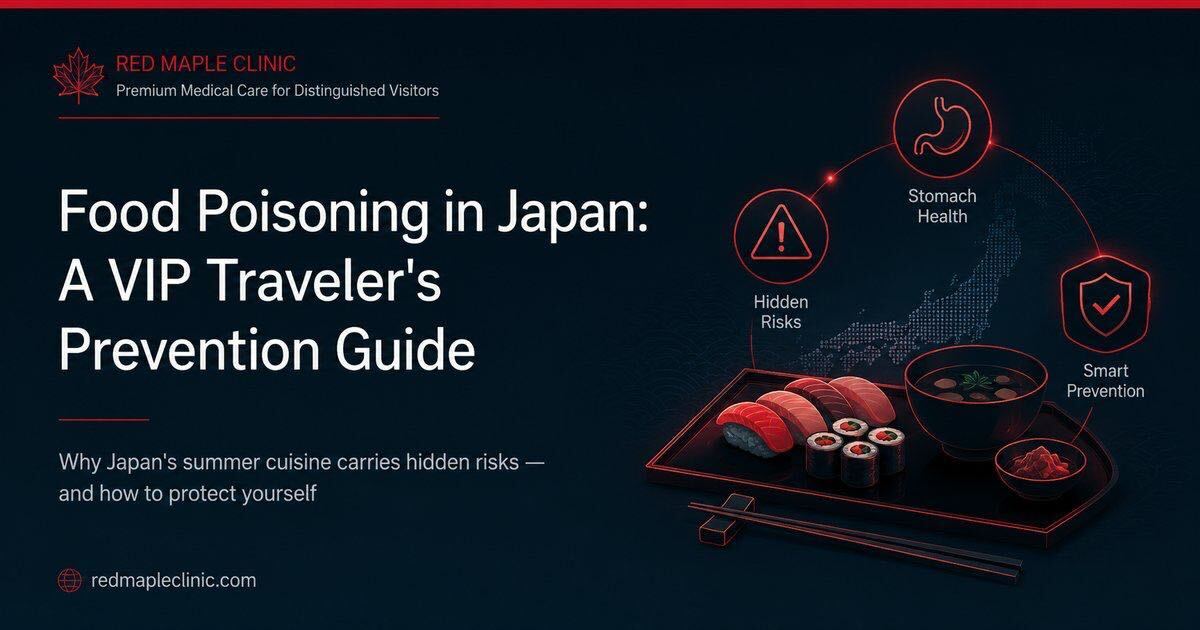
Why Japan's summer cuisine carries hidden risks and how to protect yourself
Why Japan's Summer Cuisine Carries a Hidden Risk Most Visitors Never Expect
Japan is celebrated worldwide for its impeccable food culture. From Michelin-starred omakase counters in Ginza to meticulously crafted street-side yakitori in Osaka's Dotonbori, the standard of culinary hygiene here surpasses most countries on earth. So when distinguished travelers arrive for a summer visit, food poisoning is typically the last thing on their minds.
That confidence, while understandable, is precisely what makes Japan's summer months so deceptive.
Between June and September, Japan's unique combination of extreme humidity and high temperatures creates ideal conditions for bacterial proliferation — conditions that can compromise even the freshest ingredients within hours. According to Japan's Ministry of Health, Labour and Welfare, foodborne illness cases spike dramatically during these months, with hundreds of incidents reported each summer across Tokyo, Yokohama, Osaka, and Kyoto.
This guide is written specifically for international executives, VIP travelers, and their families. Our goal is straightforward: help you savor every extraordinary meal Japan offers — while knowing exactly how to protect yourself, and whom to call if something goes wrong.
The Science Behind the Spike: Heat, Humidity, and Bacteria
Japan's summer climate is unlike anything most Western travelers have experienced. Cities like Tokyo and Osaka routinely exceed 35°C (95°F) with humidity levels above 80%. This creates a near-tropical environment where bacteria such as Campylobacter, Vibrio parahaemolyticus, and Salmonella can double their population every 20 minutes on improperly stored food.
The specific risks to understand
Prevention: Eight Strategies for the Discerning Traveler
You do not need to avoid Japanese cuisine in summer. You simply need to be strategic.
1. Choose high-turnover restaurants
The busiest sushi counters and seafood restaurants cycle through inventory rapidly. High volume means fresher stock. If a restaurant is empty at peak lunch hour in Tsukiji or Nishiki Market, consider why.
2. Observe temperature discipline
At premium establishments, watch whether sashimi arrives on chilled plates, whether display cases are properly cooled, and whether rice is served at the correct temperature. These are hallmarks of rigorous food safety.
3. Exercise caution with raw chicken
Chicken sashimi is a Japanese cultural tradition, but it carries genuine risk even at reputable establishments. If your gastrointestinal system is unaccustomed to it, consider ordering grilled options instead.
4. Time your street food strategically
At summer festivals, eat items as soon as they are prepared. Avoid stalls where pre-cooked food has been sitting on display. Freshly grilled and freshly fried items are your safest options.
5. Maintain the cold chain personally
If you purchase bento, sushi, or deli items to take back to your hotel, consume them within 30 minutes or refrigerate immediately. Your hotel concierge can provide ice packs if needed.
6. Stay exceptionally hydrated
Dehydration weakens your gut's natural defenses. Japan's summer humidity causes significant fluid loss even without vigorous activity. Carry water at all times — and be aware that heatstroke and dehydration create compounding health risks alongside foodborne illness.
7. Carry a probiotic
Many experienced travelers begin a high-quality probiotic supplement several days before arriving in Japan. While not a guarantee against infection, probiotics support gut resilience during dietary transitions.
8. Know your personal risk factors
Travelers over 65, those with compromised immune systems, pregnant women, and young children face elevated risk from foodborne pathogens. For these individuals, avoiding raw seafood and raw eggs entirely during summer months is a prudent precaution.
Recognizing the Symptoms: When to Act
Foodborne illness in Japan typically presents within 6–72 hours of exposure, depending on the pathogen. Watch for these warning signs:
Mild cases may resolve with rest, hydration, and electrolyte replacement. However, for international travelers — particularly those on tight business schedules or multi-city itineraries — waiting to "see if it passes" is rarely the optimal strategy.
What to Do If You Fall Ill: Your Immediate Action Plan
Navigating Japan's medical system as a foreign visitor can be daunting. Most hospital emergency rooms involve extended wait times, limited English-language support, and unfamiliar administrative procedures. For a VIP traveler who needs to recover quickly and return to their schedule, this experience can be genuinely distressing.
This is precisely why we built Red Maple Clinic's concierge medical service.
Step 1: Contact your hotel concierge immediately
Simply tell them:
"Please call a doctor from RED MAPLE CLINIC."
Our team is known to concierge desks at leading luxury hotels across Tokyo, Yokohama, and the greater Kanto region. We respond rapidly — often within the hour — and can arrange in-room consultations, telemedicine assessments, or priority clinic visits.
Step 2: Receive a professional assessment
Our physicians are experienced in travel medicine and fluent in English. We will evaluate your symptoms, determine whether laboratory testing is needed, and provide targeted treatment — including IV rehydration therapy when indicated.
Step 3: Hospital referral if necessary
In cases requiring advanced care — severe dehydration, suspected bacterial sepsis, or complications in high-risk patients — Red Maple Clinic maintains a priority referral pathway to Shonan Kamakura General Hospital, one of Japan's most respected medical institutions. This means no waiting in a general emergency queue. You receive direct, coordinated care.
A Note on Japan's Excellent Food Safety — and Why Summer Is the Exception
We want to emphasize: Japan's food safety infrastructure is among the best in the world. The risk we describe here is seasonal and specific. During cooler months, the likelihood of foodborne illness from Japanese cuisine is remarkably low.
Summer, however, demands a different level of awareness. The same extraordinary ingredients that make Japanese cuisine legendary — fresh fish, raw egg, delicate preparations served at ambient temperature — become vulnerability points when ambient temperature means 35°C and rising.
Travel wisely. Eat magnificently. And if your body sends a warning signal, don't hesitate to reach out to a medical team that understands both the urgency and the nuance of caring for international patients in Japan.
Red Maple Clinic — Premium medical care for distinguished visitors to Japan.